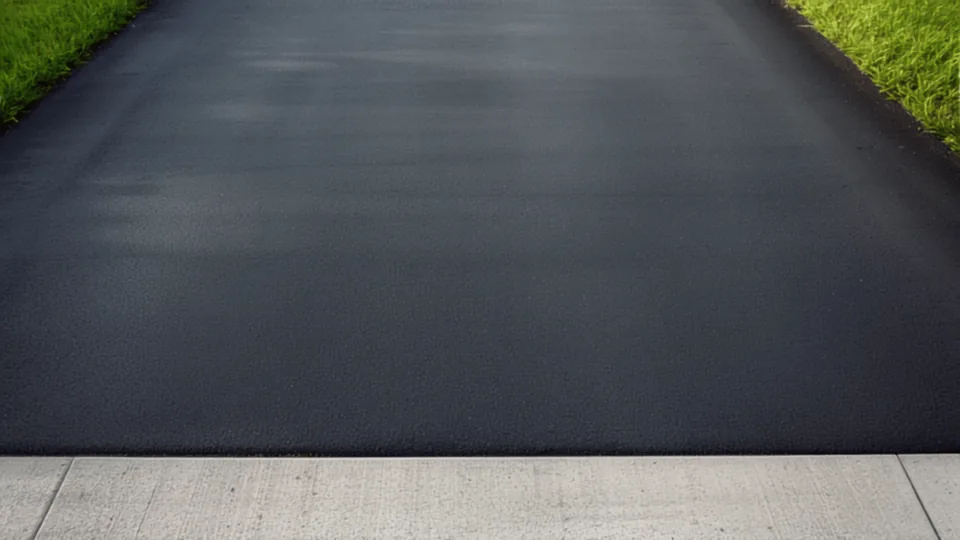
What the Coating Is Actually For
A sealed surface is easy to misunderstand because the result is so visual. The property looks new again, and looking new is not what was purchased. What was purchased is a sacrificial layer, and understanding that one word explains everything else about when it is worth doing.
Asphalt ages primarily by reacting with air and sunlight. The binder — the material holding all that stone together — gradually hardens and loses its flexibility. The visible symptoms are familiar to anyone with an older property: the color fades toward gray, the texture opens up so individual stones become distinct, and fine openings begin appearing because a stiff material cannot absorb movement the way a supple one can.
A coating sits on top and takes that punishment instead. Ultraviolet light lands on the coating rather than on the binder. Rain and winter chemicals meet the coating rather than soaking into the top few millimeters of pavement. When the coating wears away, it has done its job — it was meant to be consumed.
What It Cannot Do, Stated Plainly
It adds no strength whatsoever. Not a little. None.
The layer is thin, it has no structural role, and it does not bridge, bind or stabilize anything. Applied over a property that has begun to move, it produces a uniform appearance for a season while everything continues underneath exactly as before. Worse, it makes the next assessment harder, because the symptoms that would have told somebody what was wrong are now hidden under a fresh coat.
This is the single most useful thing for a property owner to know about it, because it is the distinction between maintenance that is genuinely worth the money and a cosmetic purchase dressed up as protection. On a surface that is still sound it is a small outlay that buys years. On a failing one, it is paint.
Preparation Is Most of the Job
The application itself is quick and unremarkable. Everything that determines whether the result lasts happens beforehand, and this is the part that varies most between one bid and another.
- Cleaning. The surface has to be genuinely clean. Dust, loose grit and accumulated debris stop the coating from adhering, and it will lift in sheets within months.
- Oil and fuel spots treated separately. Petroleum residue softens the binder and prevents adhesion. Those areas need dealing with on their own before anything goes over them.
- Vegetation removed at the root. Anything growing in an opening will keep growing under a coating.
- Openings closed first. A coating is not a filler and it will not bridge a gap of any consequence. Anything worth closing gets closed before the coat goes on, not instead of it.
A proposal that lists a rate for the coating and says nothing at all about preparation is describing half the job. It is entirely reasonable to ask which of the items above are included and which are extra, and the answer tells you a great deal about who you are dealing with.
How Often Is Often Enough
The usual rhythm is measured in years rather than seasons, and the correct interval is set by the surface rather than by the calendar. A property in full sun all day, or one taking constant traffic, will need attention sooner than a shaded run used by two vehicles.
The useful signals are visual and anyone can read them. Color drifting toward gray, texture opening up so the aggregate stands out, water darkening the surface immediately rather than beading briefly first — those say the previous coat has been consumed. Deep black and tight texture say it has not, and nothing needs doing yet regardless of how long it has been.
Over-application is a real failure mode
Doing it too frequently is not merely wasteful, which is the part that surprises people. Coats accumulate, and a thick accumulation behaves differently from a thin one: it becomes brittle and starts cracking within itself, in a fine web that is entirely independent of the pavement underneath. Removing that is more difficult and more expensive than any of it needed to be. A property on a fixed annual schedule, coated whether it needs it or not, is being maintained toward a problem it would not otherwise have had.
The Weather Window
Application needs warmth and it needs the surface to stay dry while curing. Both matter and the second one matters more than people expect. A coat that gets rained on before it has hardened is a coat that has to be redone.
Local humidity is the complication worth planning around. A still, muggy afternoon in the middle of summer slows curing considerably compared with a dry, breezy day at a similar temperature, and the surface can feel dry to the touch a long time before it has hardened all the way through. Vehicles returning too early leave marks that never entirely disappear. It is worth surrendering the property for a full day rather than trying to reclaim it at dusk.
New Pavement Needs to Wait
Freshly laid material should not be coated straight away. It is still releasing volatile components, and sealing over that traps what needs to leave. The general guidance is to allow several months into the first season before considering it.
There is also no benefit in the meantime, which is the more persuasive argument. The coating exists to replace what sunlight has taken away, and on a new surface sunlight has not yet taken anything. A property that is still deep black and flexible is already doing what a coating would be trying to restore.
Where It Sits Among the Alternatives
A useful way to think about it: coating protects a surface that is fine, closing openings protects the structure beneath a surface that is aging, and rebuilding fixes a structure that has already gone. They are not competing options and they are not stages of the same product. They answer different questions.
Almost every disappointment with a coated surface comes from applying it to answer a question it was never able to answer. Where openings need closing, the repair page covers what that involves and how to judge which openings are worth the work.
Sealcoating — FAQ
What does sealcoating actually do? It puts a sacrificial layer over the asphalt that takes the ultraviolet and the weather instead of the binder doing so. Asphalt ages mainly by oxidizing — the binder holding the stone together hardens and gets brittle, which is what the gray, dry, open-textured look on an old drive is showing. A seal slows that and it keeps water out of the surface. It does not add strength.
How often is it worth doing? Every few years is the usual rhythm, decided by how the surface looks and how much sun and traffic it takes rather than by a schedule. Sealing too often is a real thing: coats build up, and a thick accumulation can crack in sheets of its own. A drive that still looks black and tight does not need another coat just because a year has passed.
When is sealcoating the wrong call? When the surface is failing structurally. A seal over interlocking cracking or a soft area makes a distressed drive look uniform for a season while the base carries on deteriorating underneath, and it makes the eventual assessment harder because the symptoms are hidden. Cracks worth filling should be filled first; a base that has gone needs rebuilding, not painting.
How new does a drive need to be before its first seal? New asphalt needs time to cure before it is sealed, and rushing it traps volatiles that need to leave. The usual guidance is to wait several months into the first season. There is no benefit in sealing a surface that is still black and flexible — the coat is there to replace what the sun has taken, and the sun has not taken anything yet.
How long is the drive out of use afterwards? Most of a day at minimum, and the humid stretch of an Ozarks summer can push it past that. What matters is not whether the top feels dry to a fingertip but whether the coat has hardened all the way through, and a hot muggy afternoon with no breeze slows that considerably. Driving on it early leaves tire marks that never fully disappear. Plan the day around it rather than trying to squeeze a vehicle back on at dusk.
More on paving in Springfield
Request a free written quote
Tell us the address and what you are looking to have done. Ask for the quote in writing with the thickness and the base work spelled out, so you can compare bids on the same terms.
Prefer to talk it through? Call (417) 815-7897.